
Articles
Sourced investigations, one claim at a time.
Every entry names the source, weighs the evidence, and ends with what a buyer should do about it.
-

Smaller Models Can Preserve Performance When the Loop Is Good
The right loop lets teams route simple work to cheaper models without giving up quality. That is how AI systems lower cost while keeping the user experience steady.
-
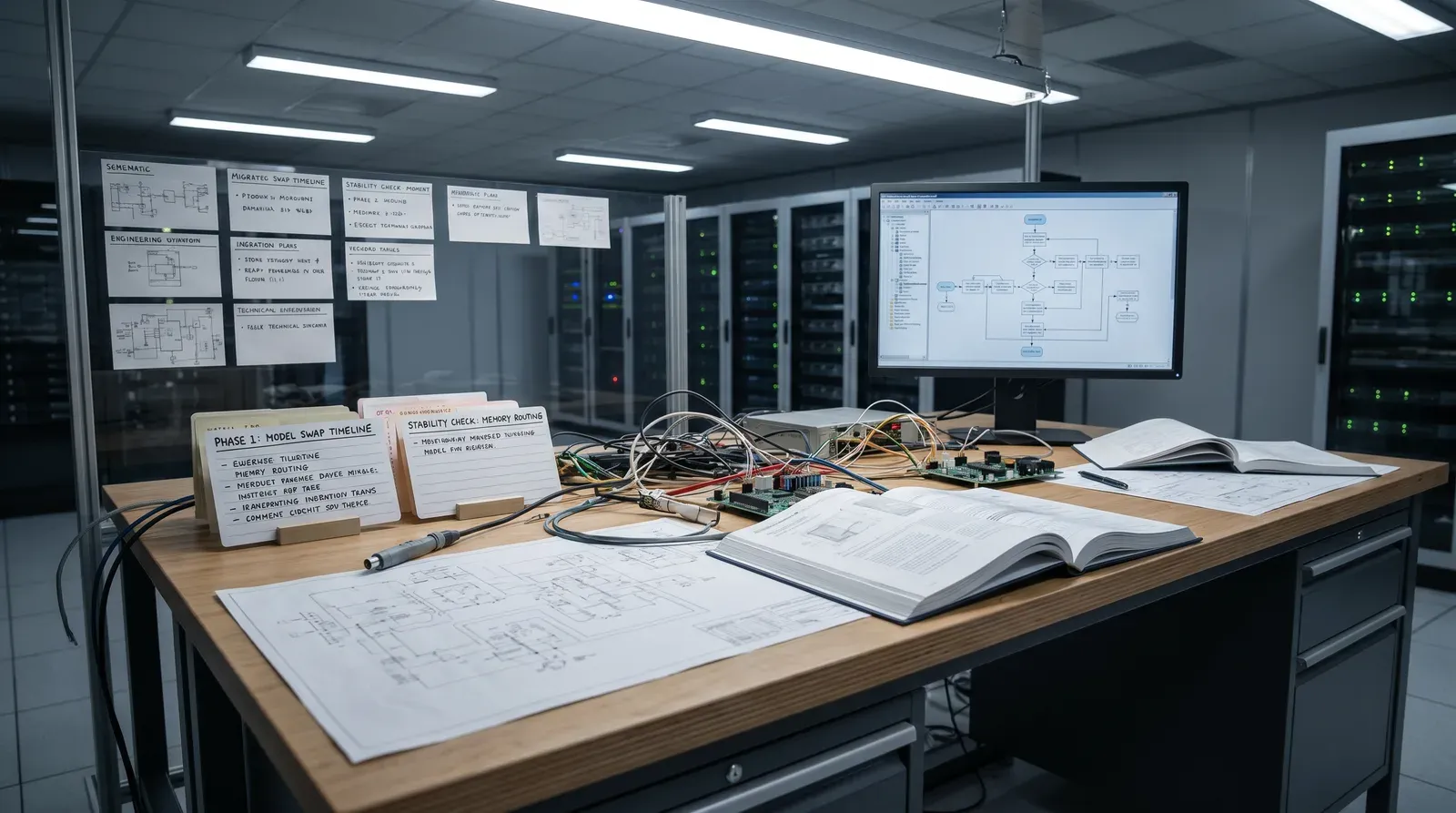
A Loop-Native AI System Keeps Growing When Models Change
The durable AI system is not the model endpoint. It is the loop that preserves state, routes work, evaluates results, and keeps learning after the backend changes.
-
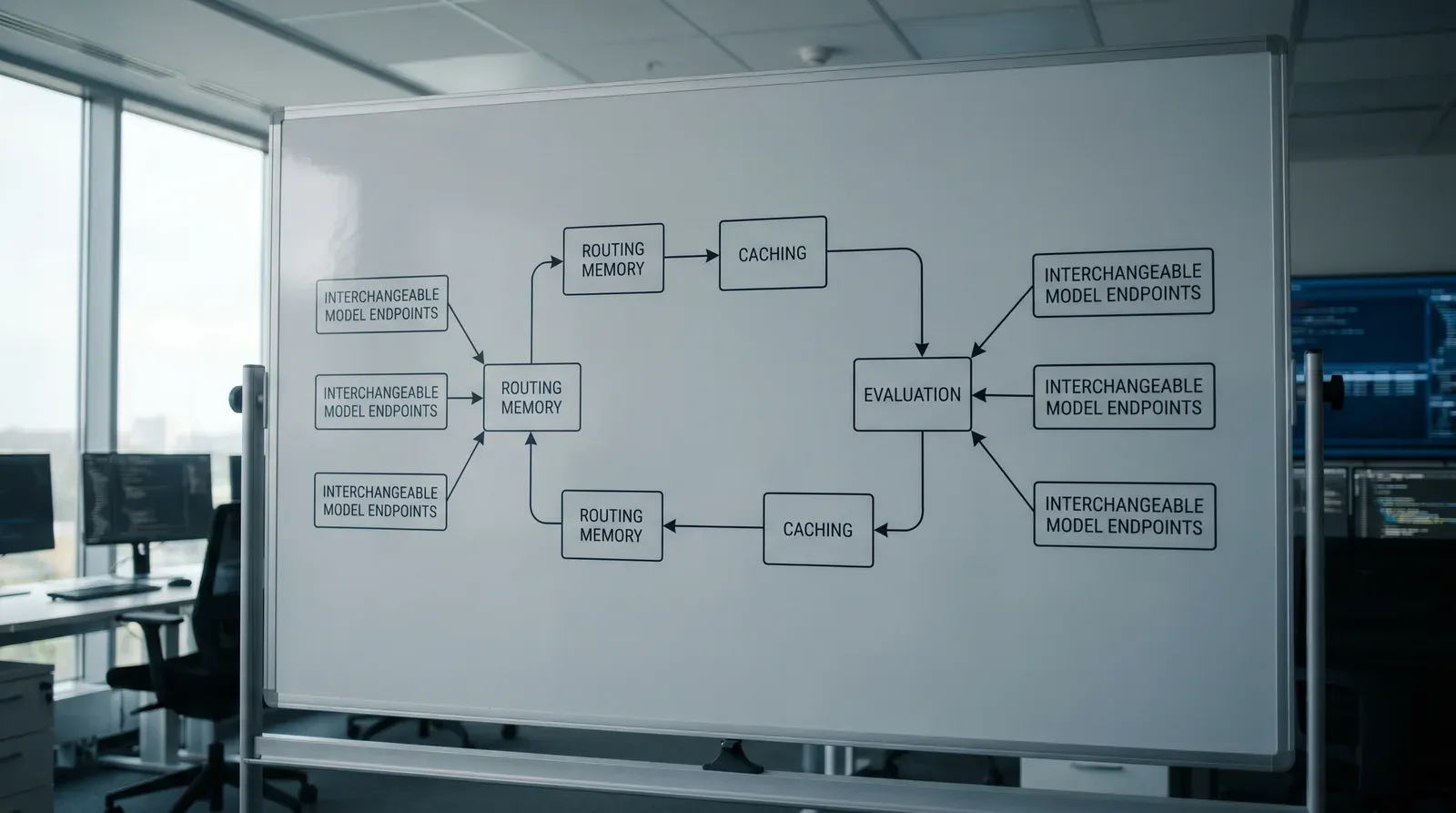
Loops Are the Moat, Not the Model
The strongest AI advantage is shifting from owning the biggest model to running the best loop. Routing, memory, caching, and measurement now do more to protect value than model size alone.
-

DGX Station for Windows, Strong Signal, Incomplete Fleet Case
DGX Station for Windows is a credible deskside AI infrastructure signal. Enterprise buyers still need fleet economics, reproducible benchmark methods, and named post-rollout outcomes before broad approval.
-

AI Adoption Fails When Curriculum Stops at Tooling
Enterprises and graduate programs are teaching AI tool usage faster than they are teaching deployment decision quality. The result is pilot motion without durable operating gains.
-

One-Size AI Rollout Is a Hidden Execution Risk
Enterprise AI rollout plans that ignore subgroup variability create avoidable adoption failures. Treat inclusion as operating design, not as a post-launch messaging layer.
-

AI Psychosis or AI Discipline, Pick One
Teams that optimize for AI intensity without naming one customer outcome create execution drag. The discipline is simple, one lever, one baseline, one owner, one stop condition.
-

Burning Tokens Without CX Proof Is a Budget Smell
Lower inference cost can improve a model budget line, but it does not prove customer value. Fund only when one CX lever has a baseline, owner, and measurement window before rollout.
-

The Anatomy of AI Hype: Five Patterns That Substitute for Buyer Evidence
Five recurring patterns separate AI launch language from procurement-grade buyer evidence: authority-by-prominence, spec without economics, methodology in the footnote, vendor chorus as evidence, and future-tense outcome. An announcement scoring three or more is positioning, not buying evidence. The framework is symmetric: it scores vendor announcements and buyer announcements identically.
-

What Counts as CX ROI Evidence Before Funding an AI Project
A three-lever funding gate for AI projects. Cost-to-serve, capacity-reallocation, and customer-felt functionality are the only places a project can cash out. If the vendor pitch does not disclose evidence for at least one lever with a pre-declared baseline, the request is positioning, not operating proof.
-
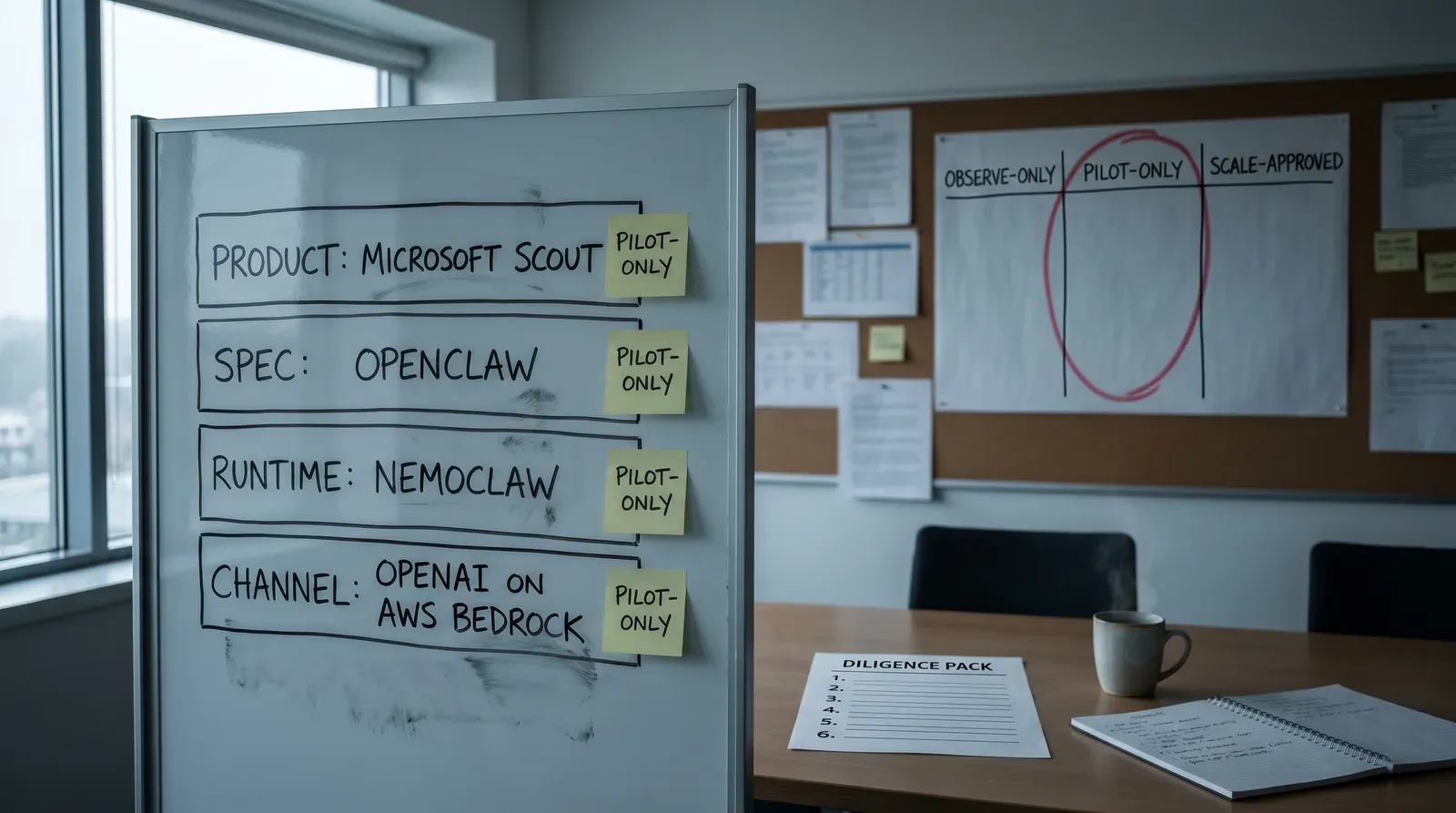
The OpenClaw Stack Is Forming Above Microsoft and NVIDIA
A layered agent stack is separating into spec, runtime, product, and channel. The buyer question is no longer whether the stack exists. It is which parts are mature enough to observe, pilot, or scale.
-
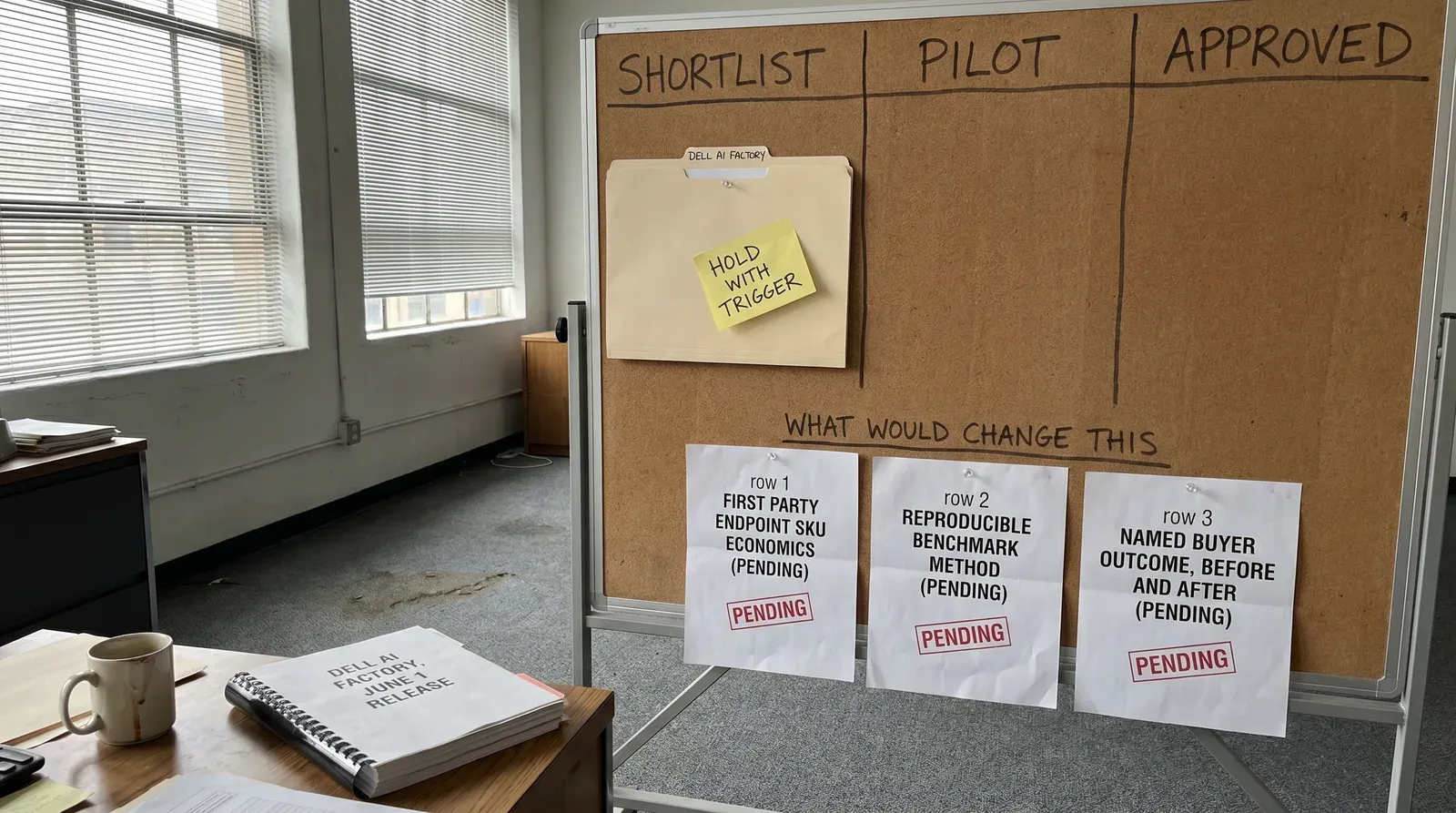
Dell Is in the AI Wave. The Buyer Proof Threshold Is Still Ahead
Dell has credible momentum in the current AI infrastructure wave, but endpoint economics and named buyer outcomes are still required before this becomes funding-grade evidence.
-
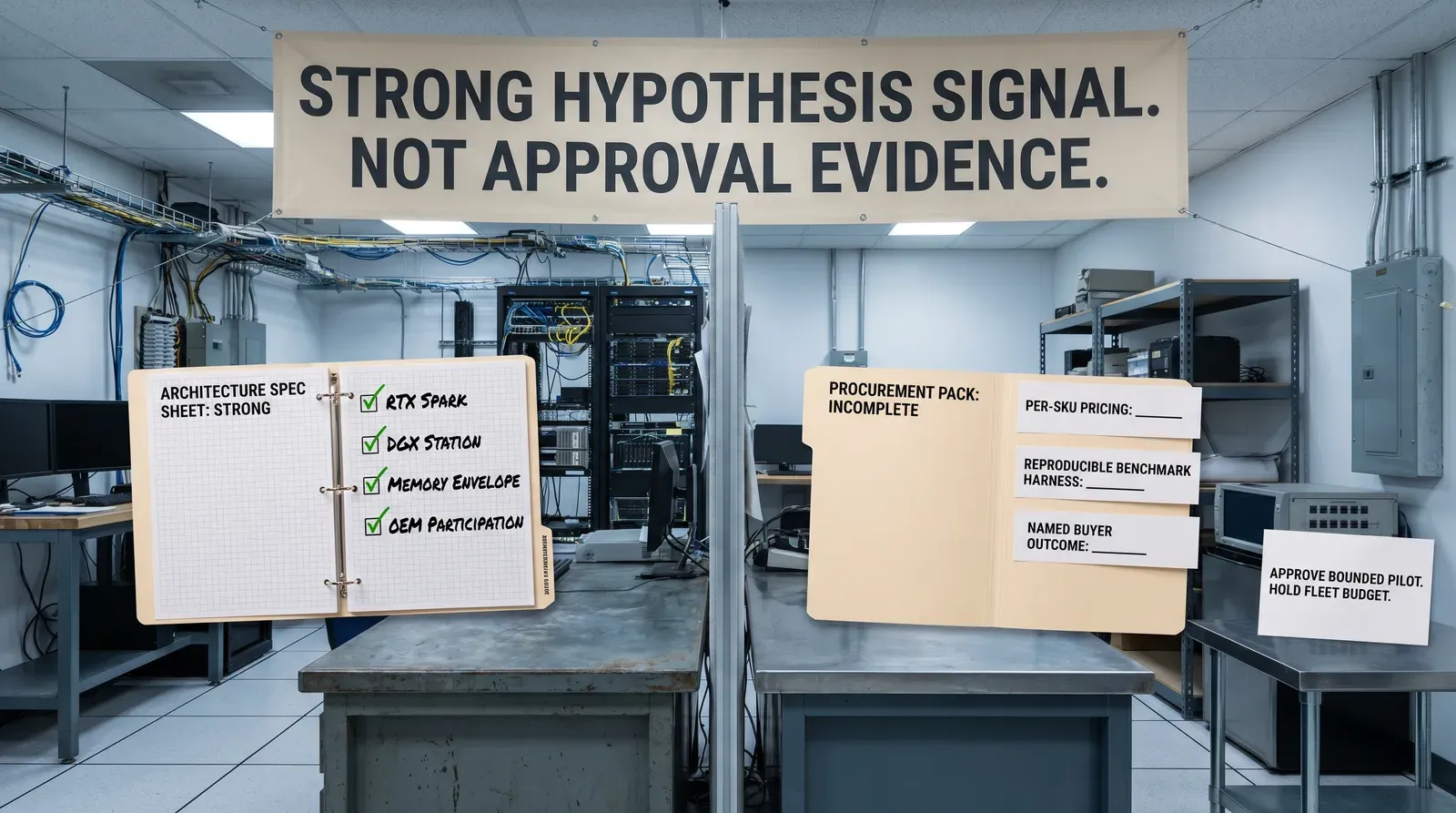
NVIDIA Has the Specs. Buyers Still Need the Procurement Pack
NVIDIA's RTX Spark and DGX Station launches are strong architecture signals, but enterprise funding decisions still require pricing, reproducible benchmark disclosure, and named buyer outcomes.
-
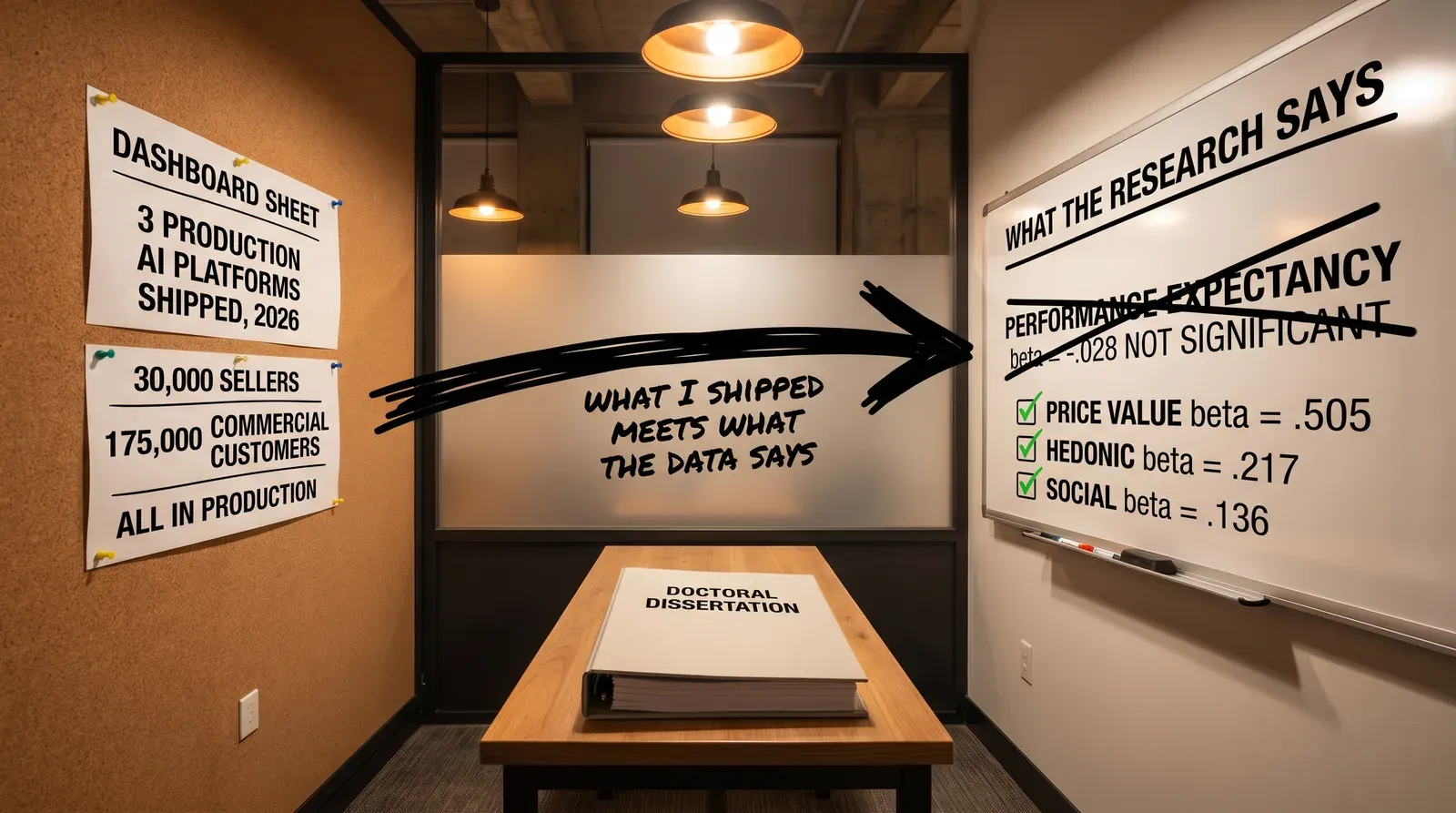
I Shipped Production AI at Scale. Here Is What the Research Says Actually Drives Adoption.
A researcher who shipped 3 production AI platforms to 30,000 sellers in 2026 then quantified what drives adoption in 523 U.S. adults. Performance expectancy did not make the list. Three other factors did.
-
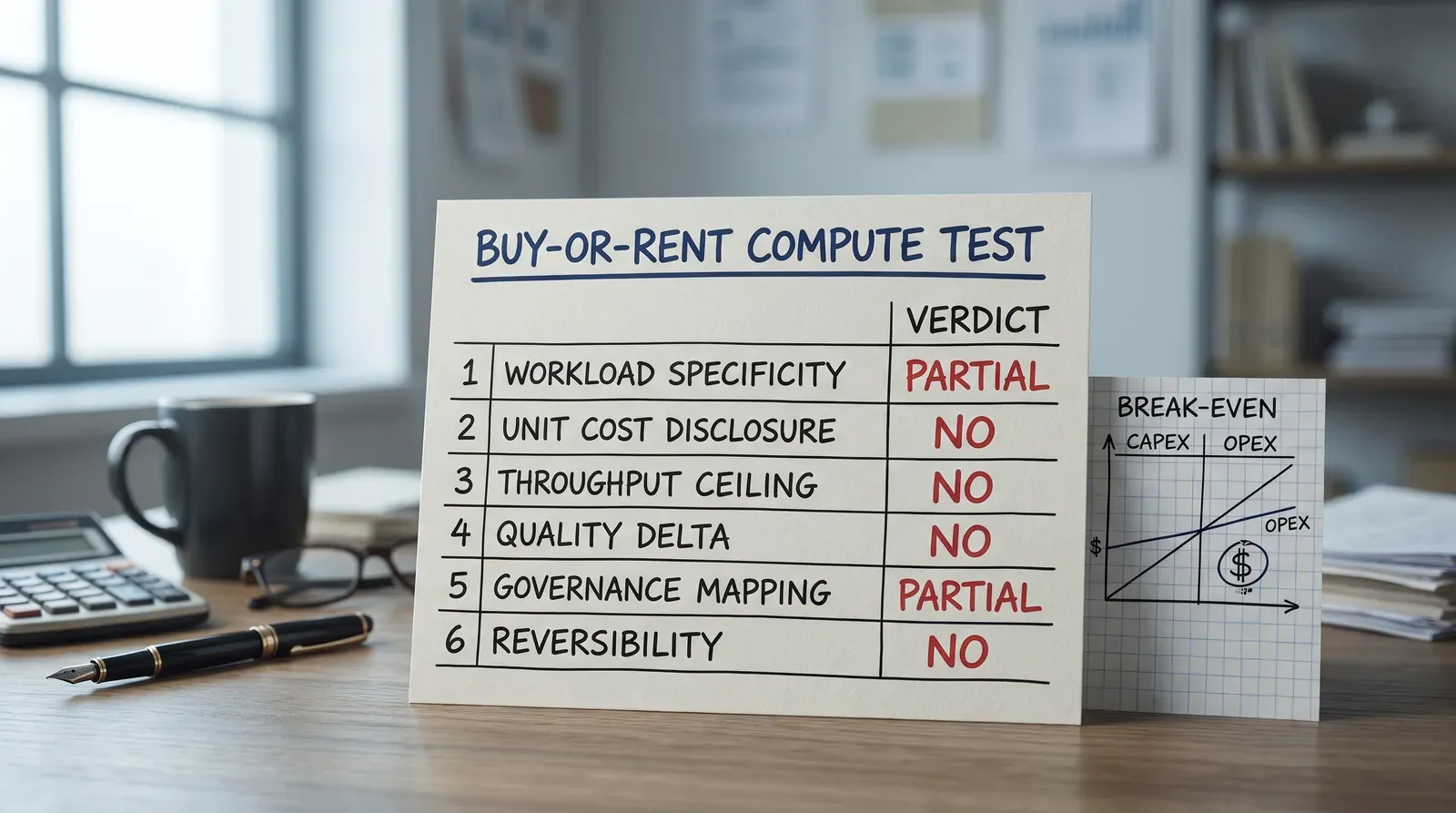
The Buy-or-Rent Compute Test. A New Standing Rubric, Applied to the Microsoft + NVIDIA Launch
This living article introduces the Buy-or-Rent Compute Test and applies it to the May 31 to June 1 Microsoft plus NVIDIA PC launch, where capability is clear but proof is still incomplete that buying hardware can reduce ongoing cloud spend.
-
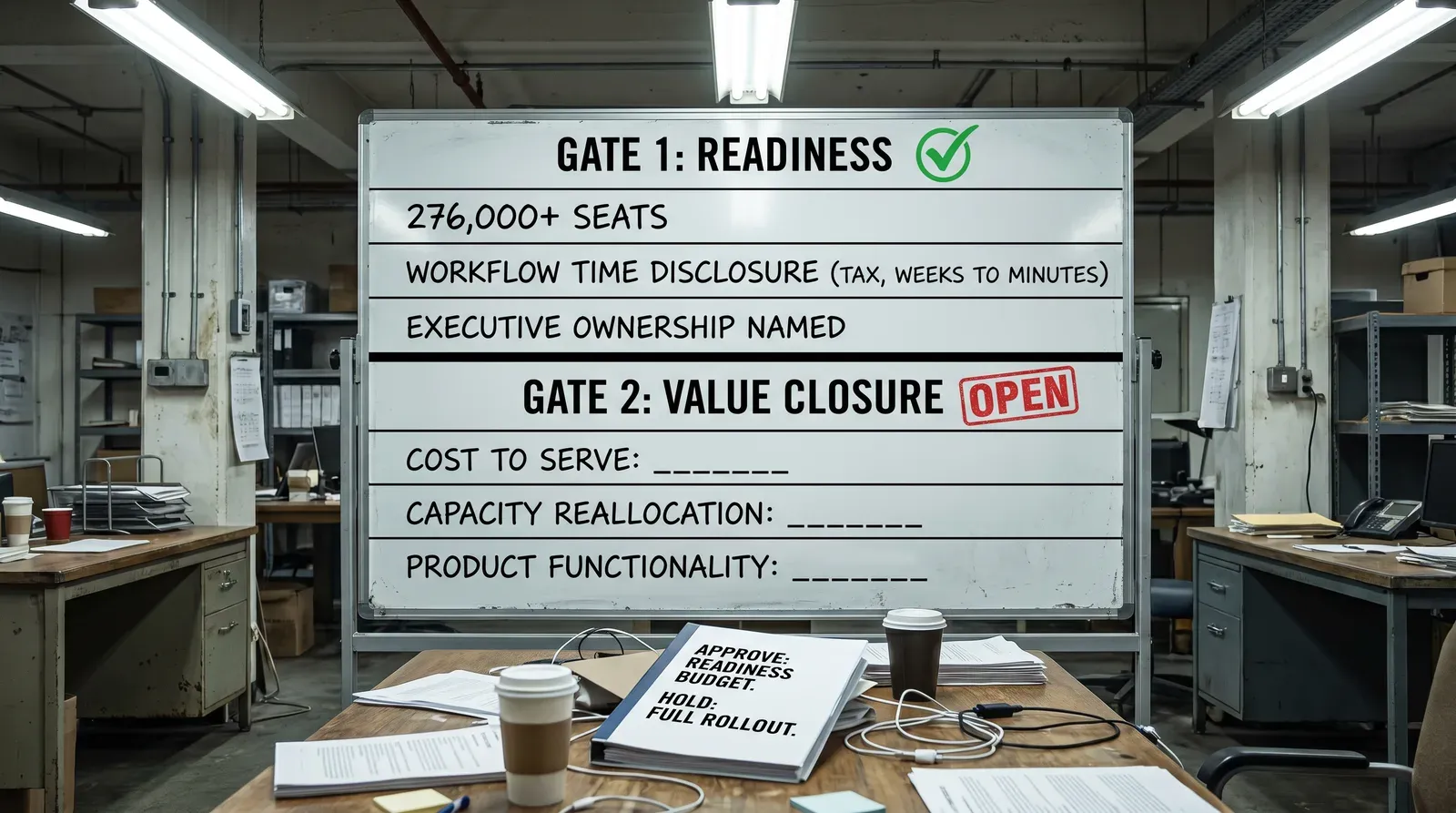
KPMG at 276,000 Seats Is Real Readiness. It Is Not Value Closure Yet
The KPMG rollout is a credible enterprise readiness signal with one meaningful workflow-time disclosure, but program-level value evidence is still under-disclosed.
-

OpenAI Just Reframed Frontier AI Scores as a Setup Problem
OpenAI's new evaluation playbook says harness, budget, and validity checks can change results. That is a buyer warning, not just a safety note.
-
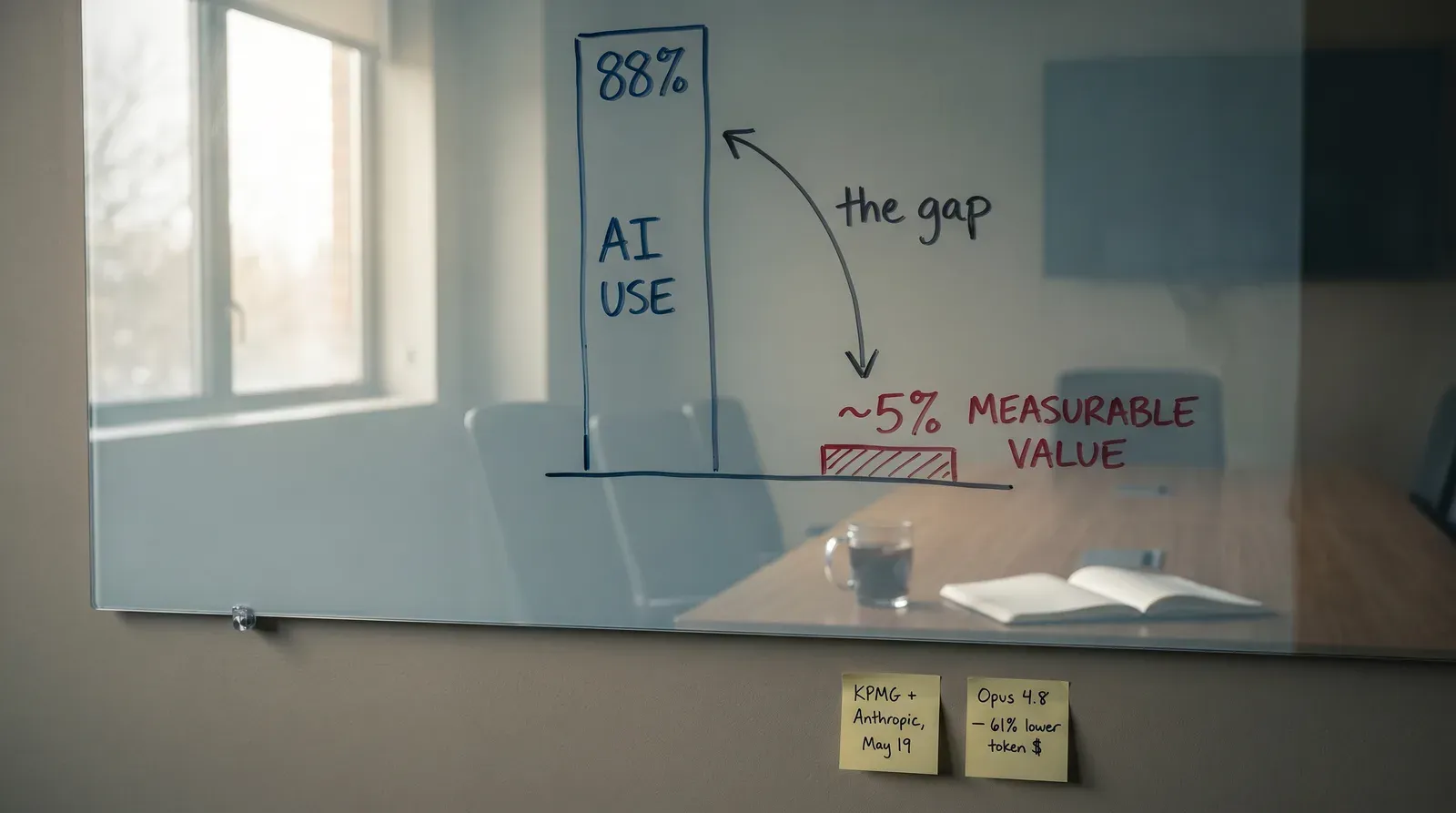
Cheaper Tokens Don't Close the Adoption-Value Gap
KPMG-Anthropic at workforce scale and Opus 4.8 at 61% lower token cost are real signals, not closure proof. The 88% vs ~5% gap lives at the outcome layer, not the input layer.
-

PwC's Second Announcement Had the Metrics, My First Verdict Missed Them
I collapsed two PwC announcements into one. This correction separates May 5 from May 14 and lands on a split verdict: compelling for the alliance, lukewarm for Advocate Health.
-

Starbucks Killed Automated Counting in 9 Months, and the Adoption-Value Gap Captured Itself
Starbucks rolled out NomadGo's computer-vision inventory tool across North America in September 2025, then retired it the week of May 18-22, 2026 and returned stores to manual counts. For the adoption-value gap, this is a rare named-buyer case where deployment and abandonment happened inside one observation window, making the gap visible without inference.
-

What Andy Crowder Actually Bought: A Three-Lever Read of the PwC-Advocate Health Deal
The May 14 PwC-Advocate Health expansion through the CX-as-ROI three-lever filter. Capacity is the lever pulled; cost-to-serve and customer-felt functionality remain claimed but unevidenced.
-

What Buyers Actually Said: Two Weeks of Vendor Noise vs. Named Evidence
Four W21-W22 announcement clusters scored by named-buyer evidence depth. Three lukewarm, one skip. The contrast that shows where decision quality fails.
-
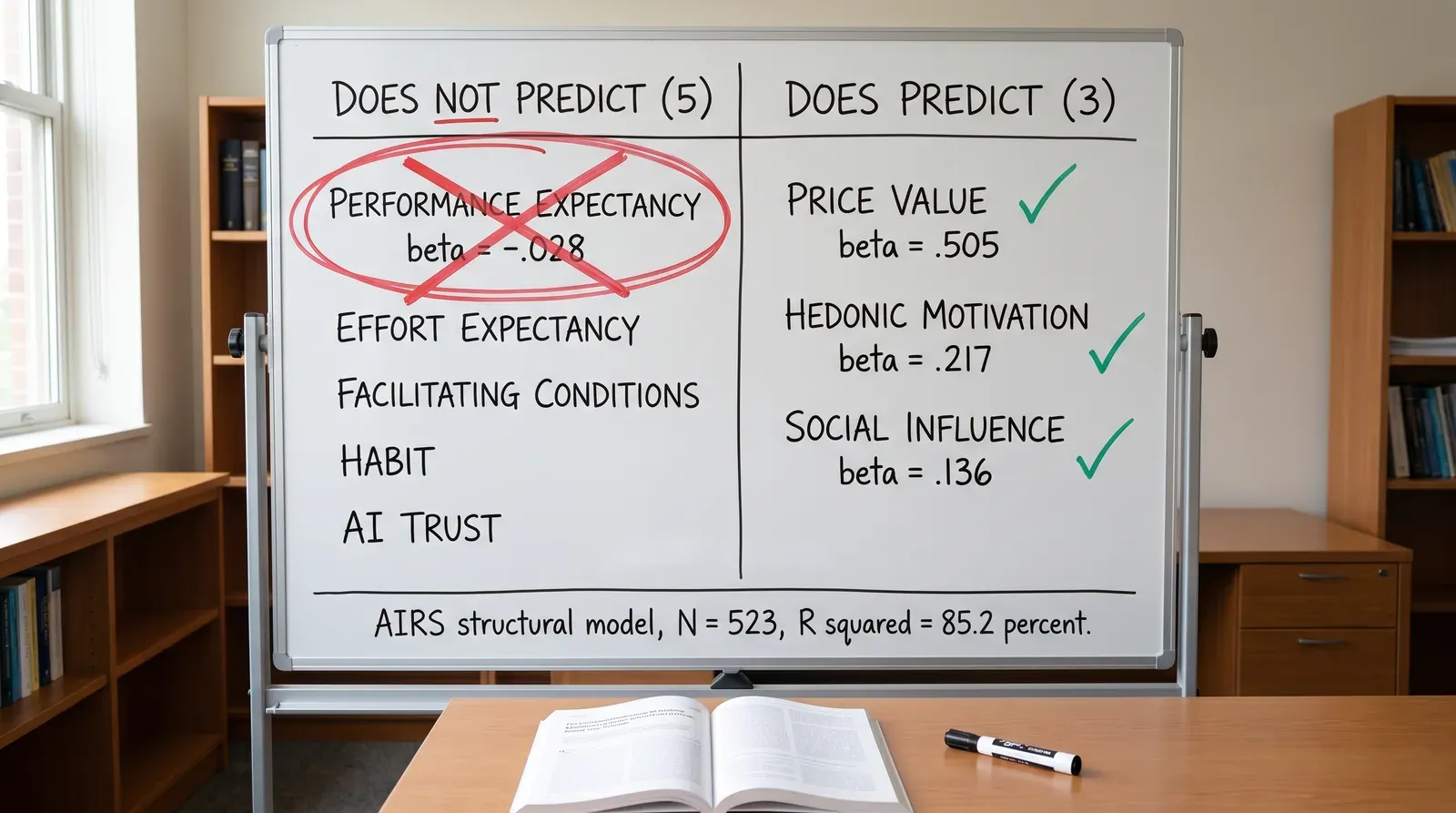
Performance Expectancy Does Not Predict AI Adoption
A structural model of 523 U.S. adults found that performance expectancy had no statistically significant effect on AI adoption intent. The vendors pitching better capability specs are pulling the wrong lever. Here is what your deployment should be designed to pull instead.