
Methodology
How we read. Source tiers, two-pass investigation, statistical-claim qualifiers, corrections.
What this lens looks for
The publication’s own methodology, examined in public. Articles through this lens are about how a verdict was reached, not just what the verdict was.
When we apply it
- A reader asks how a published verdict was sourced
- A change in research, sourcing, or correction protocol warrants disclosure
- A common reasoning trap (selection bias, denominator drift, citation laundering) shows up across multiple recent announcements
The standing rules
Source tiers. Every claim is sourced to a tier:
- T1: peer-reviewed work, regulatory filings, earnings call transcripts, official vendor releases, AIRS canonical data
- T2: reputable trade press, vendor blogs with disclosed methodology, named LinkedIn posts
- T3: anonymous social, Reddit, X. Excluded as standalone evidence; corroboration only.
Every analytical claim is anchored at T1. T2 and T3 sources are leads, walked back to a T1 primary before they enter the queue.
Two-pass investigation. No story enters the queue on a single T2 or T3 signal. Pass 1 surfaces the lead. Pass 2 walks it to a primary source. The article either ships with the primary in hand or does not ship.
Statistical-claim qualifiers. Any draft that prints β, p, Cohen’s d, R², CFI, or RMSEA carries an in-sample qualifier nearby. A coefficient without the sample is theatre.
Corrections. When the record changes, the corrections log carries the change with date, source, and what was wrong.
Articles through this lens
-

A Loop-Native AI System Keeps Growing When Models Change
The durable AI system is not the model endpoint. It is the loop that preserves state, routes work, evaluates results, and keeps learning after the backend changes.
-
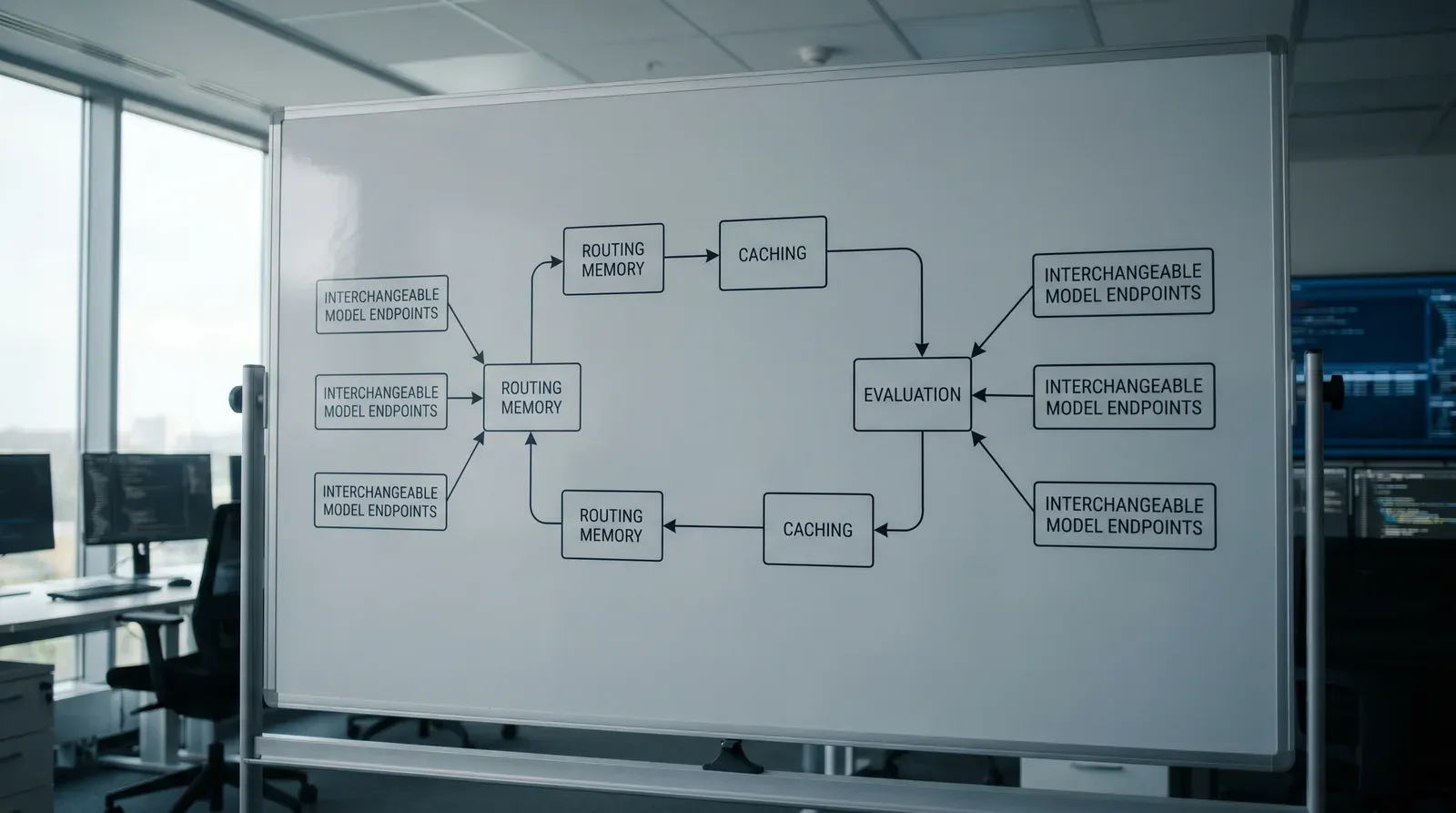
Loops Are the Moat, Not the Model
The strongest AI advantage is shifting from owning the biggest model to running the best loop. Routing, memory, caching, and measurement now do more to protect value than model size alone.