
Adoption-value gap
Heavy AI use, thin measurable value. The gap this publication exists to read.
What this lens looks for
Enterprises adopt AI tools faster than they capture value from them. Adoption metrics (seats, usage, model availability) move long before outcome metrics (cost-to-serve, capacity, customer-felt functionality). This lens measures announcements against the gap.
When we apply it
- An announcement leads with adoption (license count, usage rate, partnership scale)
- The named outcome metric is internal-facing (productivity, training completion, internal NPS), not customer-facing
- A claim of “value” rests on input layer wins (cheaper tokens, faster inference) rather than outcome layer wins
What the verdict looks like
Articles through this lens separate the adoption signal from the value signal, name what was measured versus what was claimed, and call the gap if it is still open at the outcome layer.
How AIRS grounds the lens
The AIRS research program supplies the canonical framing for the gap. The instrument measures organizational readiness across eight factors; the program’s headline finding is that adoption (Behavioral Intention and Usage) outpaces value capture in the typical organization. Articles through this lens use AIRS as the lens, not as a substitute for deployment outcome evidence.
Articles through this lens
-

DGX Station for Windows, Strong Signal, Incomplete Fleet Case
DGX Station for Windows is a credible deskside AI infrastructure signal. Enterprise buyers still need fleet economics, reproducible benchmark methods, and named post-rollout outcomes before broad approval.
-

Dell Is in the AI Wave. The Buyer Proof Threshold Is Still Ahead
Dell has credible momentum in the current AI infrastructure wave, but endpoint economics and named buyer outcomes are still required before this becomes funding-grade evidence.
-
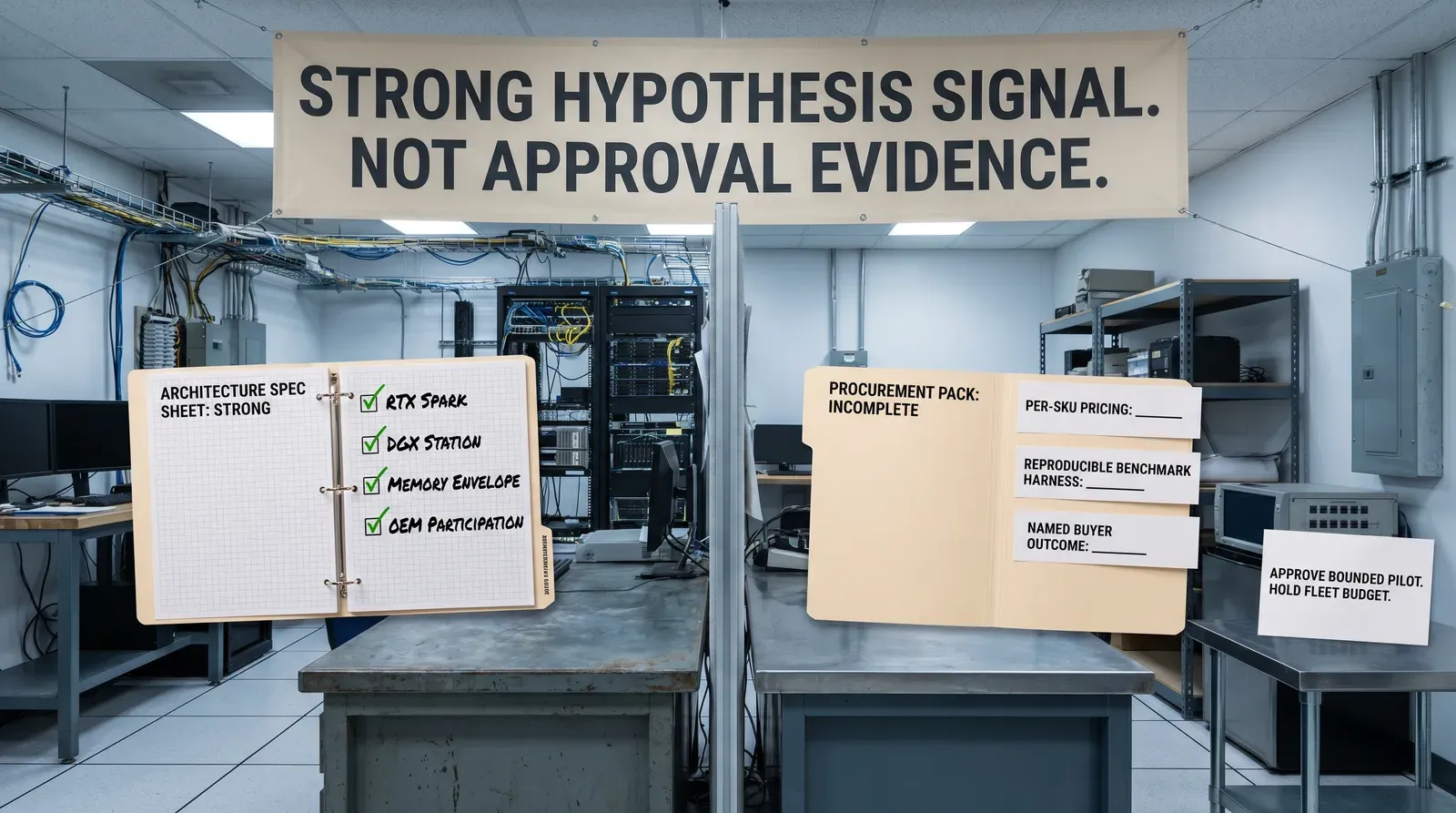
NVIDIA Has the Specs. Buyers Still Need the Procurement Pack
NVIDIA's RTX Spark and DGX Station launches are strong architecture signals, but enterprise funding decisions still require pricing, reproducible benchmark disclosure, and named buyer outcomes.
-
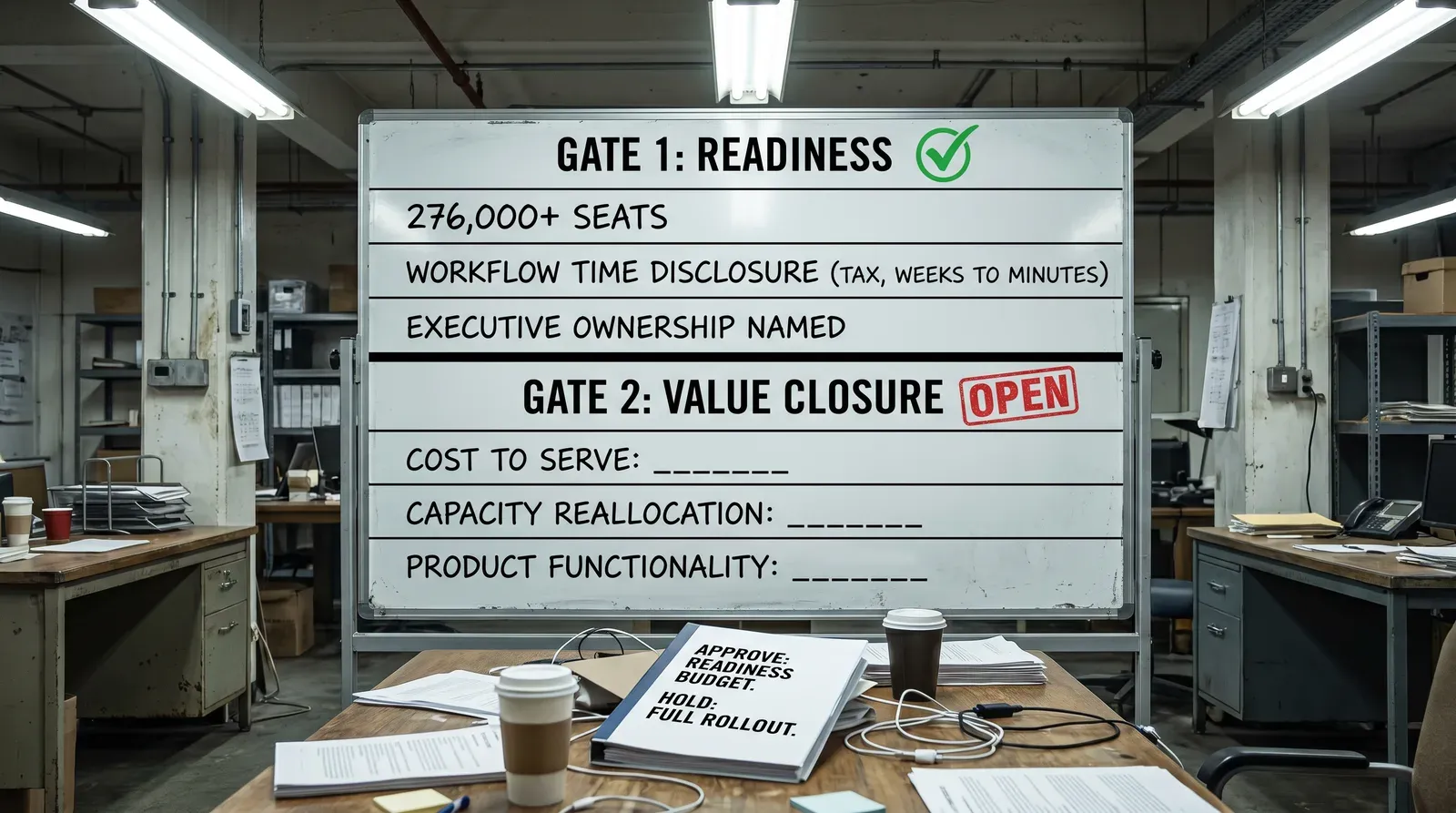
KPMG at 276,000 Seats Is Real Readiness. It Is Not Value Closure Yet
The KPMG rollout is a credible enterprise readiness signal with one meaningful workflow-time disclosure, but program-level value evidence is still under-disclosed.